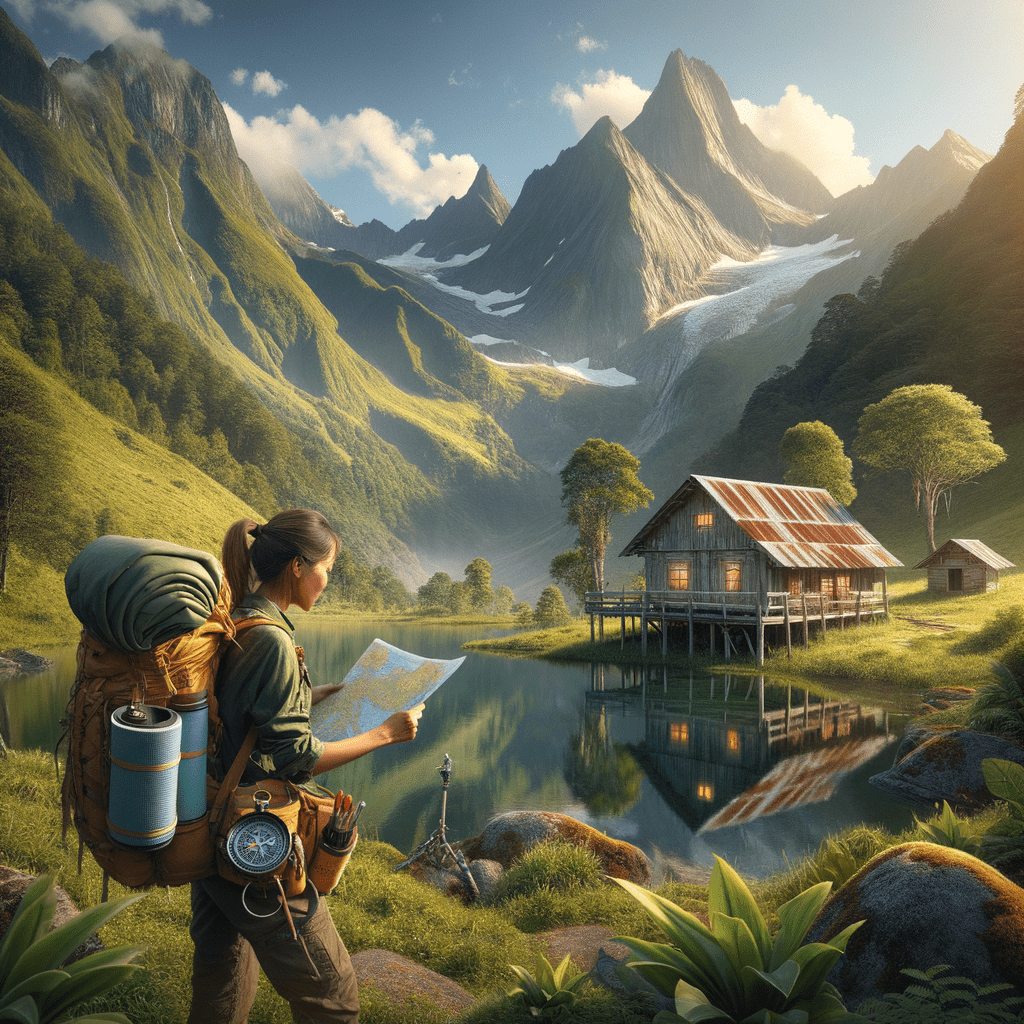
The mountains rise higher and higher, the forests stretch to the horizon, and the white snow gives a sleepy, slow, and pure feeling.
A frozen journey in the Catskill Mountains, upstate New York.
What do two Middle Eastern guys do who wake up in the morning and find their car turned into a snow mound? The obvious answer is to turn on the wipers, and embarrassingly, that is exactly what we intended to do.
The thing is that to operate the wipers, you have to open the door, and when you open the door, even in a Mercedes, snow falls from the roof onto the front seat. “What do you think, people here just spend the first few minutes of the morning, the worst part of the day, cleaning the car?” laughed a local acquaintance.
“Losers” is probably the last word to describe the people living in the Hudson Valley and the Catskills it is cold in winter, but the view is breathtaking, life is calm, and income is abundant.
Pastoral calm takes over? No problem: Manhattan bars are just a two-hour drive away.
This short distance makes the Catskills an attractive destination for New York tourists. Close, but you can see the one thing, more or less, that Manhattan lacks: authentic and rural America, America where “Main Street” still exists, $4 hamburgers, unhealthy breakfast pancakes, and overweight men climbing into giant pickups.
Not just anthropology: in winter there are ski resorts, in summer dozens of hiking trails in the forests.
In short, we packed and set out for a double goal: to test a new Mercedes SUV and to use the test drive to explore Manhattan’s backyard.
First stop: shopping
I love the Mercedes GPS.
The Germans sent it to a manners and conduct workshop where it learned words like “please” and “kindly,” and to maintain the driver’s confidence; even if you ignore the instructions of the mysterious female navigator speaking through the speakers, you do not get a “you erred” scolding like in other cars, at most a message that a new route is planned, and not always. In any case, with the navigator’s kind assistance, we safely left the metropolitan area and got on Route 87.
An hour later, we reached exit 16, and there is one of the wonders of upstate New York: Woodbury Common.
People come to New York also to shop, often primarily to shop, and here Woodbury comes into play.
For those who do not know, it is a giant outlet, built like a New England town, with white houses, squares, and so on.
This kitsch is occupied by stores of major, well-known brands.
Ralph Lauren’s house is not far from Calvin Klein, Timberland rubs elbows with Banana Republic and Adidas, restrooms are behind Nike and Samsonite, and the list is endless.
The appeal, of course, is the prices, which drop dramatically. How dramatic? Discounts of 40% and 50% were common that day, though at least in some cases it was seasonal sales.
Although the isolation is perfect, and the suspension hides minor American asphalt irregularities, slightly north of Woodbury the upstate feeling still manages to creep into the cabin the mountains rise higher and higher, the forests stretch to the horizon, and the white snow cover gives a sleepy, slow, and pure feeling.
We descend onto a side road, parallel on the other side of the Hudson, Route 9.
This road passes through small towns, most of which were founded in the 17th century by Dutch immigrants fleeing religious persecution to what was the farthest corner of the New World.
The first of the towns is Hyde Park, proud of the cooking university operating there and the home of President Franklin Delano Roosevelt.
Since the election of Obama and the endless comparisons between the two, the local museum focuses a lot of attention, so it is worth checking if tours are available.
Five minutes north, we arrive at another heritage site and museum the Vanderbilt family home.
The family patriarch made a considerable fortune in the 19th century from railroads and shipyards.
So considerable that he was considered the tenth richest person in human history to spend a bit, the family built a long row of vacation homes.
On second thought, the word “house” insults this palace.
Tour it, and then take comfort that the heirs managed to spend most of the money.
A few more kilometers north, we are in Rhinebeck, a small town that was cruelly deprived and did not even receive a single historic site.
To compensate, it has a charming main street with local designer clothing shops, two wine stores, and a bakery filling the air with brownie aromas.
Driving in a snowstorm
The combination of shopping, history, and wine is incredibly tiring, so we immediately checked into a motel in the next town, Kingston (the first capital city, remembered by every resident for how the British burned it in 1778) for a short siesta.
When we woke up, we found ourselves in the middle of a snowstorm, with quite a bit of ice on the road, and it was advisable to return to Hyde Park to eat. The GLK was not impressed by the ice.
Its traction control system ESP combined with all-wheel drive is so fast that to provoke a healthy skid from the car, you really need to reach the provocation zones.
On slippery ice, this is no less than a certificate of honor for the technology. What more can be said about driving in a snowstorm? It is not always clear where the road is, occasionally you need to clear snow accumulated under the wipers, and for Asians who do not remember how 15-degree temperatures feel, not to mention minus 15, this is definitely an experience.
The next morning
The next morning brought shiny blue skies and a bright white ground.
The GPS was supposed to bring us to the Catskill peaks, but it seems the navigator had an arctic shock overnight, and instead, we landed in a town with two houses and a tractor called Cairo.
We gave up its services, took a side road, and drove without a specific direction.
The next town we reached is Woodstock, a pleasant artist town with galleries on every main street.
The immediate Woodstock got its name from this town, but it is arranged sixty kilometers away, in a town called Bethel.
Catskills scenery
Although cold, the view is breathtaking.
A turn in Woodstock, and we choose another road, generally toward the Hunter Mountains, where the main ski resorts are.
There is no doubt that this is the way to explore the Catskills: the side road twists up and down through giant forests, some bare, some evergreen; frozen streams become frozen waterfalls that flow into frozen lakes.
There are almost no people, and when there are, they always manage to surprise like three who chose to move along the road with a snowmobile or with two attractive people in a vintage Jeep from 1969.
In the small towns crossed, there are usually no more than five wooden houses and a church, and when passing through two larger towns, the immediate associative image is the romantic image of America: Main Street, a huge mix of electric wires, pickups parked near a diner with weak coffee, men in boots, and not even a single branded store.
On another side road, we find a sign promising pure maple, and enter to find a lady walking on five centimeters of frozen snow in slippers and sweatpants in the adjacent shed hangs a giant deer head dismembered from all limbs and with sad eyes.
The Hunter Mountains themselves are a stunning sight, although we did not go skiing.